
An Exploration of Large-Scale Public Art (Murals)
This module is a multi-media introduction to the context and impact of large-scale public art. We’ll explore the work of two artists, Luke Swinson and Amanda Phingbodhipakkiya, as well as interviews, videos, news articles, and academic papers. Follow along from top to bottom, or feel free to skip around!
Curated by: Valerie Chong

Source: https://twitter.com/DaveJaworsky/status/1539274493344026625
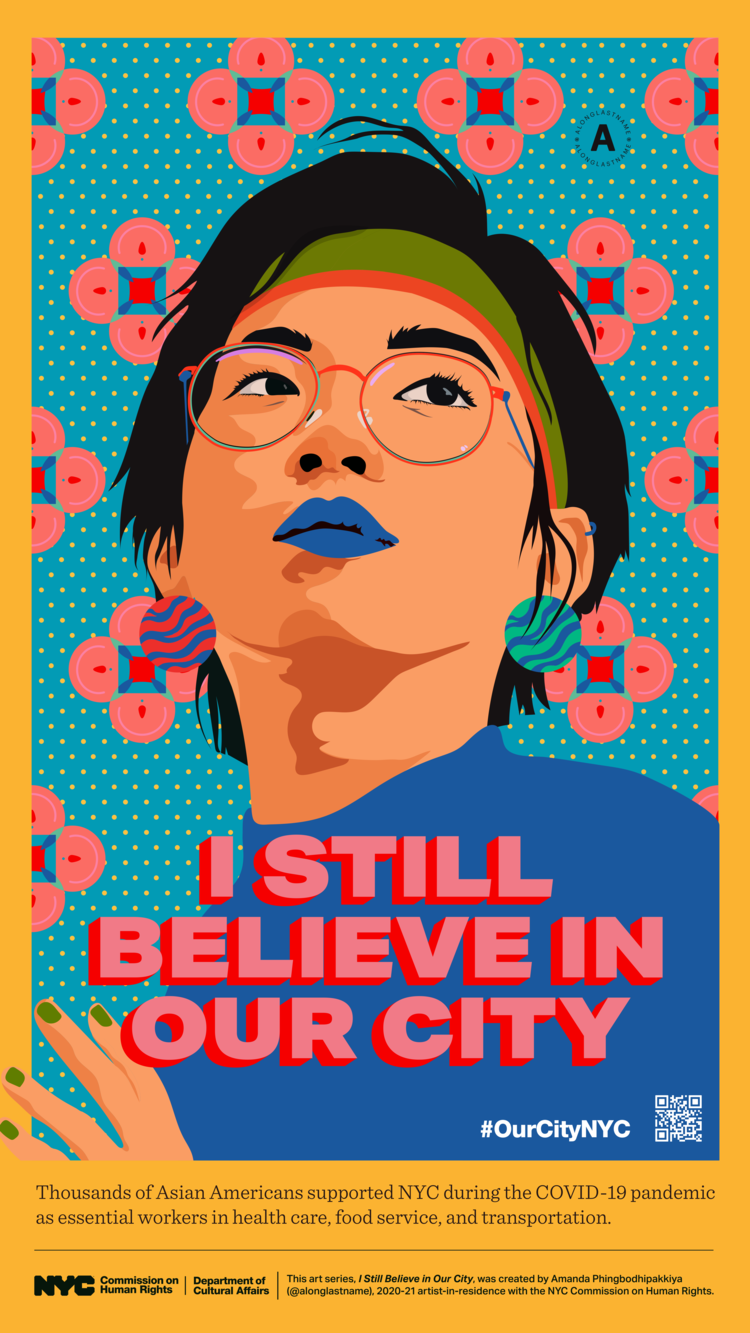
Source: https://www.istillbelieve.nyc/
Valerie’s Statement
I recently had the opportunity to dig into the works and activism of Syrus Marcus Ware, a Black Canadian artist, activist, and scholar. I was particularly entranced by his Activist Portrait Series (2016), in which Ware created large-scale portraits of BIPOC, LGBTQ+, and disabled activists. He specifically chose the large format in order to subvert the status quo in which large portraits were reserved for white and wealthy individuals and/or people in power. I loved this use of media and form as activism.
I began to look around me whenever I was out and about in my adopted hometown (Kitchener, Ontario, Canada), and reconsider the many murals I saw around downtown. I was familiar with the work of Luke Swinson, who is well-known locally, but I wanted to know more about his murals and the impact they were having on my community. Then, I remembered an artist whose mural work had captured my attention during the COVID-19 pandemic: Amanda Phingbodhipakkiya, who goes by @alonglastname online. Why had the idea of her #AntiAsianHate art on huge billboards in New York City struck me so deeply? I wanted to explore this art form that is all around me but that I had never truly appreciated.
I’m so excited to share this exploration with you. I hope that it sparks you to pay more attention to the murals in your community – and perhaps, to create one yourself.
What is a Mural?
Like so many forms of media, what can be considered a mural is extremely subjective. In this case, what I’m really looking at is “large-scale public art”, which is a subset of street art. This includes:
- murals & ground murals
- billboards
- bus station displays
- created by independent artists/artist groups (i.e. not marketing companies)
- in public spaces, free to view
- could include commissioned pieces
This does not include:
- graffiti/tagging
- stickers
Read More!
In this curation project, I am less concerned with the academic definitions of types of art, and more about the impact of large scale public art. But if you’re looking for more information about what constitutes street art, and some related history, check out the following article:
Curious about small-scale street art? This peer-reviewed article provides a wide look at the ways activists have used protest stickers as a method of mobilization and communication. The analysis spans an archive of more than 5,000 photographs of protest stickers taken over six years in 53 locations!
I Still Believe In This City: Amanda Phingbodhipakkiya
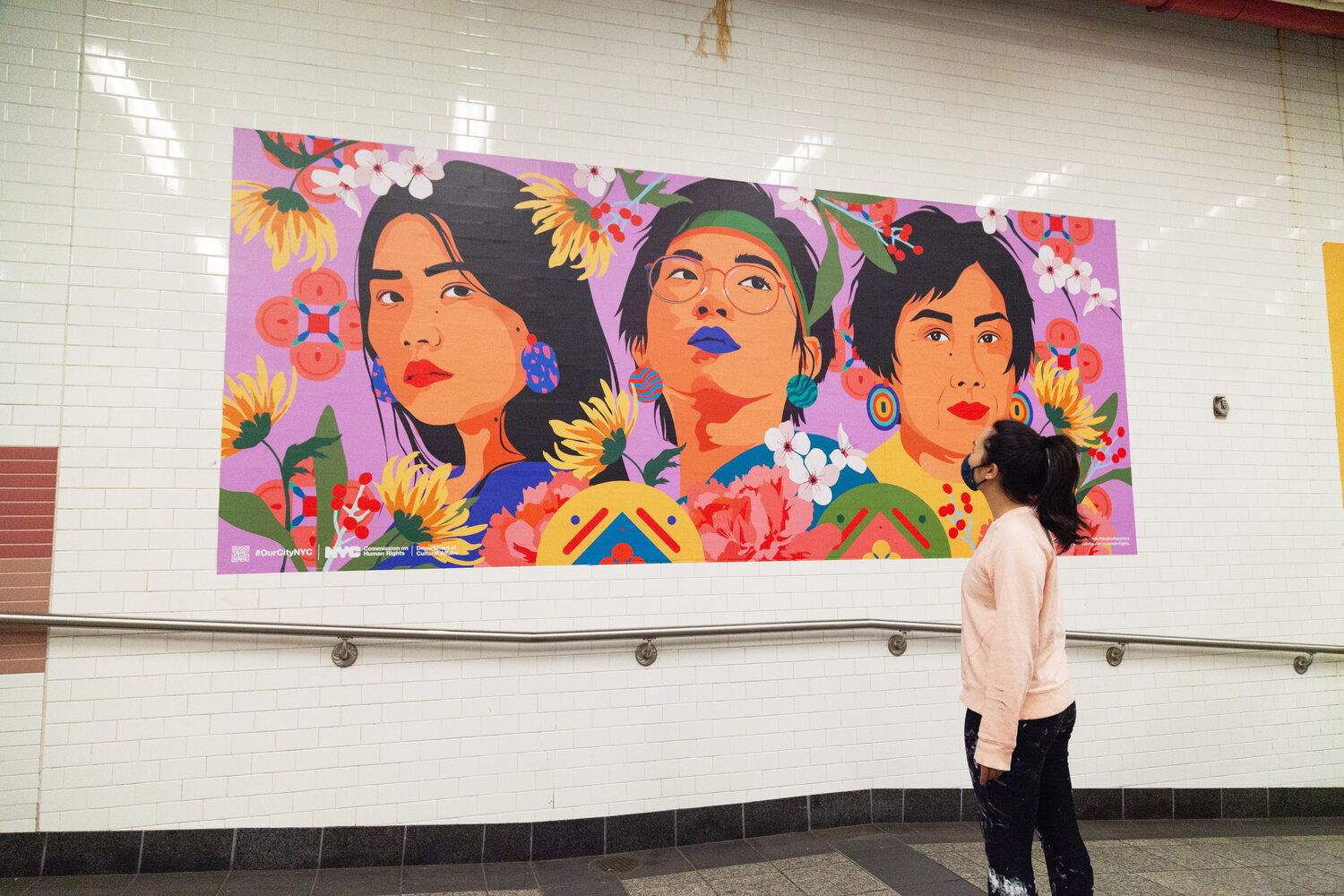
Amanda Phingbodhipakkiya is an American artist based in New York. The daughter of Thai and Indonesian immigrants, her practice spans sculpture, large-scale murals, installation, and public art campaigns. I came across Phingbodhipakkiya’s work during the COVID-19 pandemic when I Still Believe In This City, a series of her work featuring Asian faces and themes, went viral on Instagram under #StopAsianHate. The works were featured on a number of large billboards, bus stops, and subway stations in New York. I love their bold, bright colours.
gizaagi’in: Luke Swinson
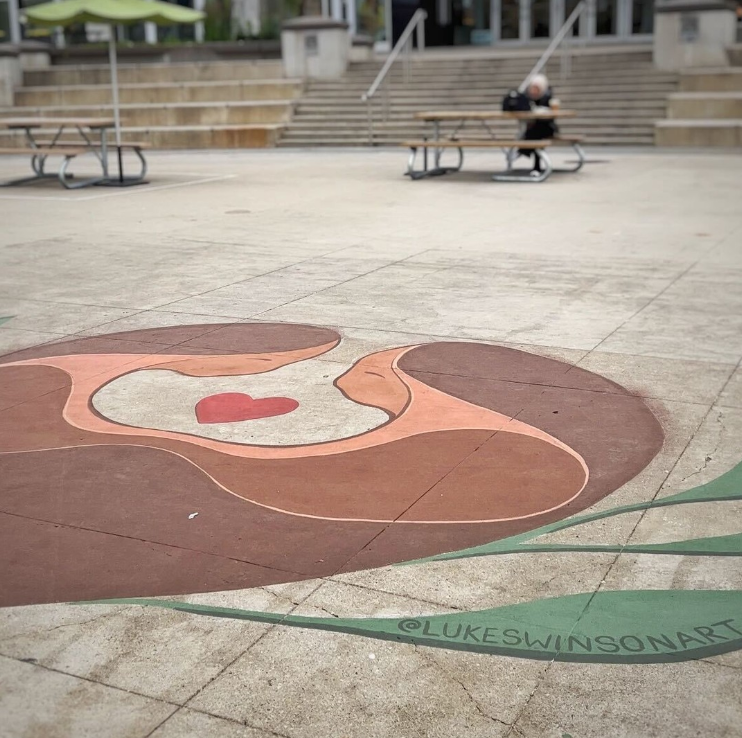
Luke Swinson is a visual artist with Anishinaabe roots from Kitchener, Ontario. Luke’s work is well-known in Waterloo Region as one of our most beloved local Indigenous artists. This ground mural (pictured to the right) is located in Waterloo Public Square and was installed in June 2022 in honour of National Indigenous Peoples Day. It features two people in a heart shape with the word “Gizaagi’in” (“I love you” in Anishinaabe) painted near it.
In The News
Check out a selection of news articles about the impact of Amanda’s and Luke’s work. The second article includes information about a number of other Asian-American “artivists” who are all worth exploring.
Note: If you do not have a New York Times subscription, the article below is available in PDF form upon request through Valerie or through access at Western University.


I still believe in our city”: A public art series takes on racism (New York Times)
The Power of Murals Within Minority Communities
Murals can play an important role within minority communities. While they are absolutely beautiful decoration that liven up walls, bridges, and public spaces, they are also vehicles for storytelling, cultural expression, and social change. Murals are an accessible and visible way to celebrate diversity, shine a light on injustices, and raise the voices of the unheard. In their best form, murals can encourage community discussion and challenge the status quo.
Read More!
This graduate thesis by Yujia Tang is an excellent analysis of the impact of murals on minority communities in the United States; specifically, it looks at three mural programs with a focus on the Asian American, Black, and Mexican-American communities respectively. The author’s points include community empowerment, cultural representation, education, the rise of the female role within mural arts, and the overall social role of murals. The thesis also includes a strong list of references for anyone who wants to dig further.
Watch More!
I enlisted the help of my good friend Bridjet to discuss our thoughts and the impact that Amanda’s work has had on us as Chinese-Canadian women. We chat about why we find I Still Believe In This City hopeful, if it really matters how many people see the murals, and more.
Check out our conversation on YouTube:
Murals as publicly-supported art
When cities and public organizations invest in art, it can be a collaborative process where leaders, artists, and community members come together to create something beautiful for all citizens to enjoy and learn from. It can stimulate the local art and tourism scenes as well as encourage home-town tourism. However, problems can arise if the organizers of the projects are predisposed to favour certain artists over others or if there is an unfair process of dividing the available funds. Artists need to have the agency to create pieces that reflect the themes, communities, issues, and causes that they care about.
During the height of the COVID-19 pandemic, the Downtown Kitchener BIA and the Kitchener-Waterloo Art Gallery (both non-profit organizations) collaborated to create the Downtown Kitchener’s Art Walk as both a safe, outdoor method of entertainment for the locals to rediscover their city and a way to support local artists and businesses.
The project is a collection of 86 pieces of public art (mostly murals, but also includes sculptures, tile, and a fountain) located within downtown Kitchener. Themes include Every Child Matters, immigration, community, joy, and more.
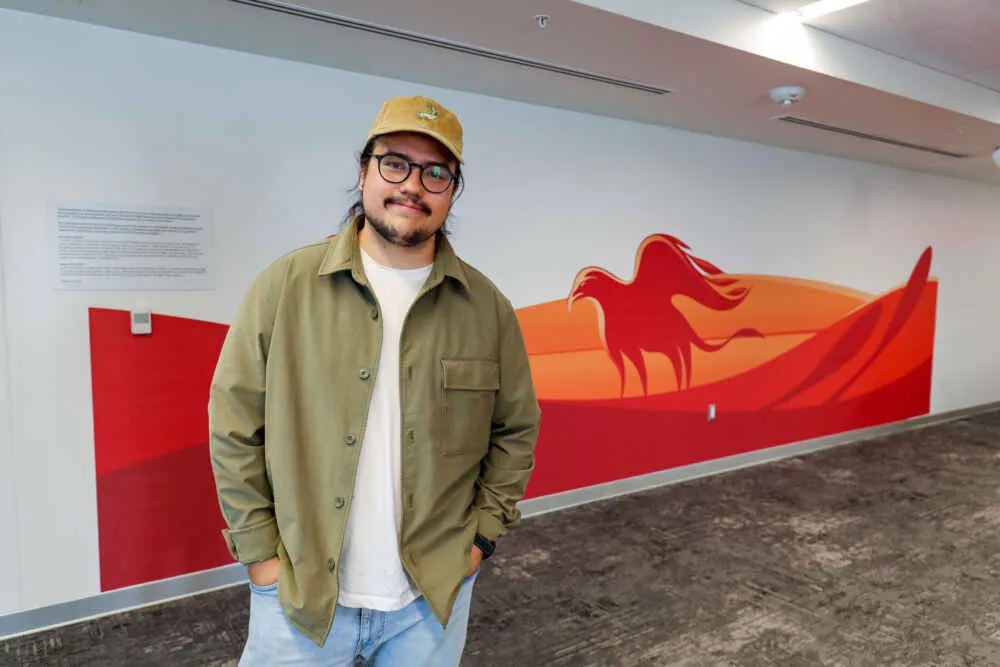
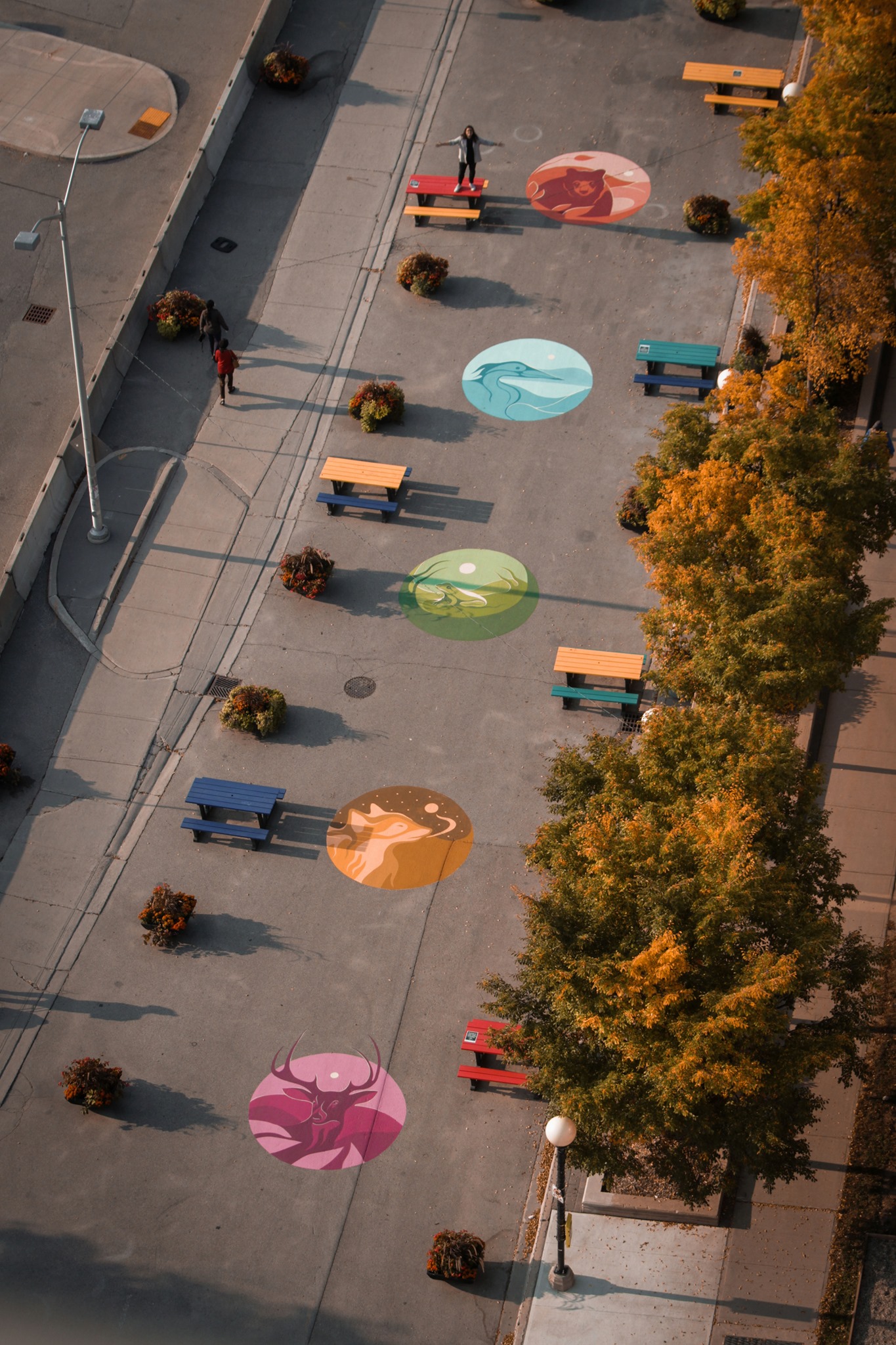
Luke Swinson contributed two pieces to the project: a wall mural of a blue heron, and a ground mural series of five pieces (pictured to the right). They bring a splash of colour and a touch of nature to the downtown core.
I had the chance to briefly interview Lakyn Barton, Festival and Events Specialist for the City of Waterloo in the Arts and Creative Industries division which organizes the ground mural program.
Amanda Phingbodhipakkiya’s I Still Believe In This City was also publicly funded. Amanda was a 2020-21 public artist-in-residence, a program run by the New York City Department of Cultural Affairs in which artists are paired with a city agency to create an impactful project for a specific audience. Amanda paired with the NYC Commission on Human Rights to create her series.

Source: Community Edition
Source: Facebook
Extra thoughts and readings
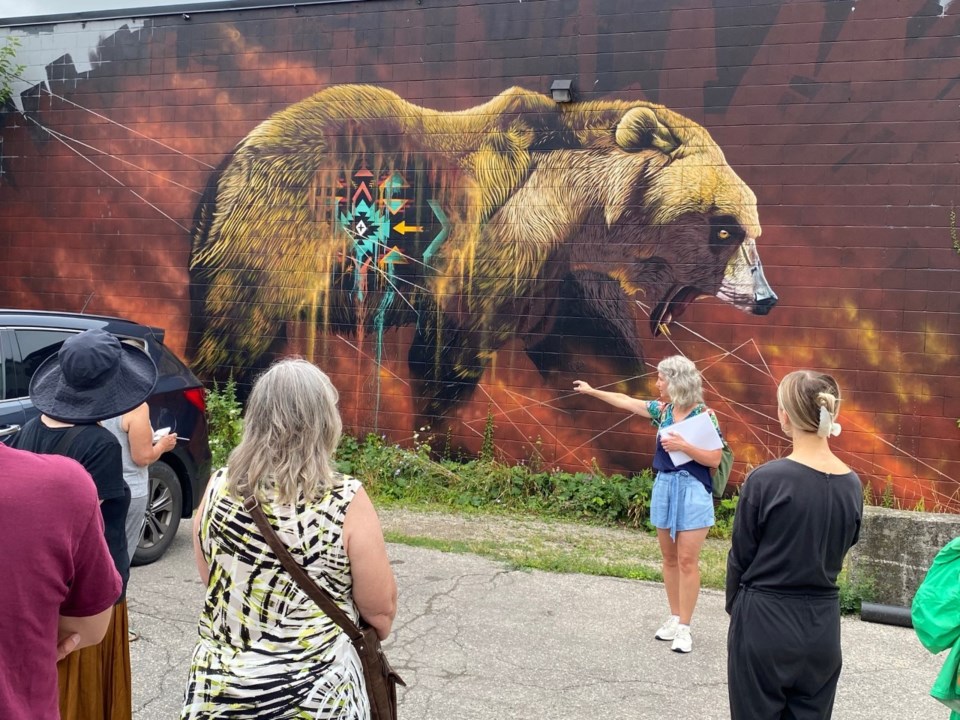
What happens when a public mural disappears? A much-loved mural, installed in downtown Galt of Cambridge, Ontario as part of the city’s 2017 International Street Art Festival, was suddenly painted over in 2023 by the building owner. It brings up questions of public art ownership, transparency, and more.
Source: Cambridge Today
Street art, including murals and graffiti, has been used as an act of political resistance for decades. This news article provides examples of how murals and graffiti have been used to demonstrate political resistance in Los Angeles including artist and community reactions.
Following the death of George Floyd, there was a massive street art movement demanding justice and change. Urban Art Mapping, a team dedicated to documenting street art, has created a digital database of as much art as they could find.

 Valerie Chong